Română
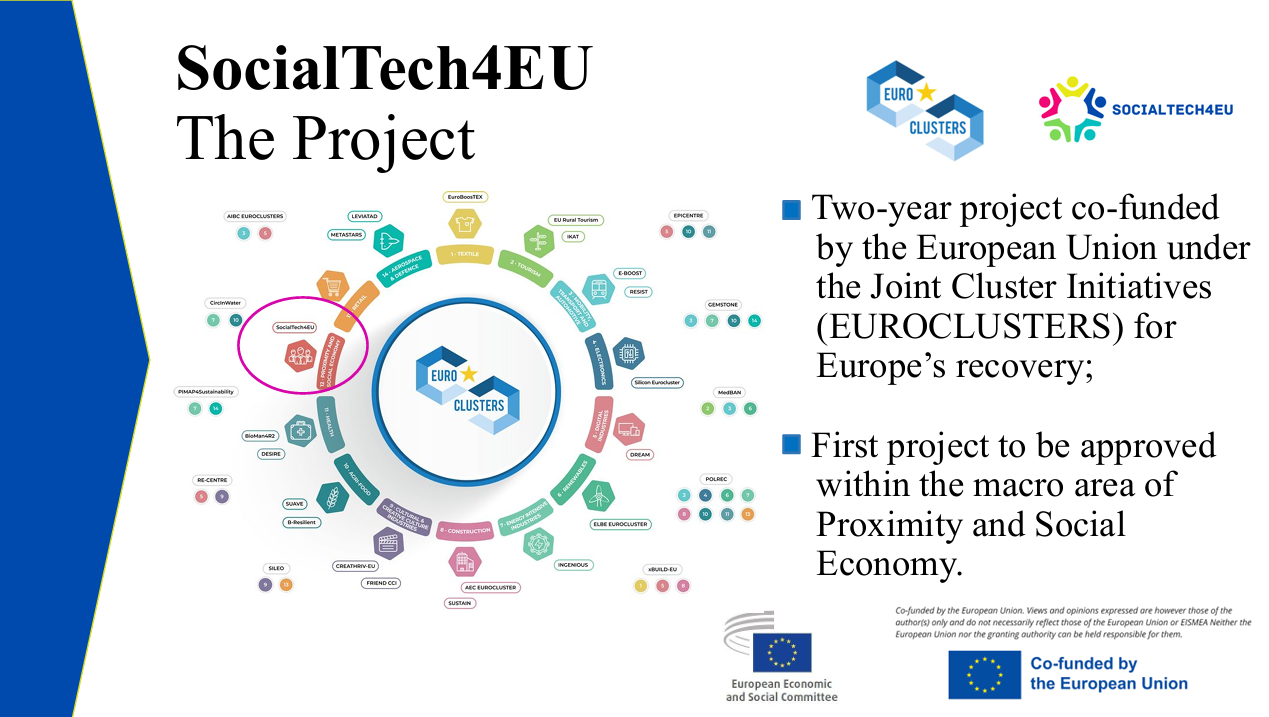
The SocialTech4EU project, a two-year initiative co-funded by the European Union under the Joint Cluster Initiatives (EUROCLUSTERS) – the first project approved within the macro area of Proximity and Social Economy, has made significant strides in promoting sustainability and improving competitiveness in the social economy sector.
Key Achievements:
Widespread engagement:
- Over 200 training proposals received from across Europe
- 100 social enterprises benefited from a €3,000 grant for training
- 20 enterprises received a €20,000 innovation grant
- 10 enterprises were awarded a €37,000 acceleration grant
Geographic diversity:
- Participation from 23 European countries, with significant representation from Italy, Romania, and Spain
Sector impact:
- Enhanced digital knowledge and created a favorable ecosystem for social enterprises
- Supported innovations in various fields, including AI and VR applications for addiction treatment, professional development platforms for mothers, and AI business model communication
Comprehensive support structure:
- Implemented a three-phase approach: Training, Innovation, and Acceleration
- Provided tailored support at each stage, from skill development to market entry
The main tools and resources created within the SocialTech4EU project include:
- Online Library:
- Educational materials for social enterprises
- Contains nearly 90 different posts including 15 MOOCs, 24 videos, 21 reports, and 35 articles
- Content available in English, German, Romanian, Spanish, and Swedish
- Covers topics such as emerging technologies, ICT skills, business administration, marketing and sales, open innovation, and more
- Virtual Maps:
- Virtual Map of Social Enterprises: A public database including the grantees from the first SocialTech4EU call
- Virtual Map of Social Economy Providers and Supporter
- Social economy data and reports
- European Social Economy Observatory Report
- Analysis of the needs and barriers preventing social enterprises from innovating and embracing digital and green transitions
- Funding:
- While not a tool per se, the project created a cascade funding approach:
- Training grants (€3,000 for 100 beneficiaries)
- Innovation grants (€20,000 for 20 beneficiaries)
- Acceleration grants (€37,000 for at least 10 beneficiaries)
- While not a tool per se, the project created a cascade funding approach:
- Social Innovation Hackathon:
- A 3-day event bringing together social enterprises, creatives, and local companies to develop and support innovation ideas
These tools and resources were designed to provide comprehensive support for social enterprises, from education and networking to funding and practical implementation of digital innovations.
Important takeaways for stakeholders:
For Euroclusters:
- The project demonstrates the effectiveness of a phased support approach, combining financial assistance with targeted training and mentorship
- Cross-border collaboration and knowledge sharing proved crucial in fostering innovation
For social economy stakeholders:
- Digital transformation is key to enhancing efficiency and competitiveness
- There’s a growing need for upskilling and reskilling in tech-related areas
- Collaboration and networking opportunities are vital for growth and innovation
For policymakers:
- The project highlights the importance of targeted funding for social enterprises
- There’s a need for policies that support the diverse legal forms of social enterprises
- Environmental sustainability should be further encouraged in the social economy sector
Challenges and future directions:
- Financial constraints: Many social enterprises identified financial limitations as the primary barrier to innovation and digitalization
- Skills gap: There’s a persistent need for digital skills training across the sector
- Balancing short-term and long-term goals: Social enterprises often prioritize immediate financial stability over long-term technological investments
Recommendations:
- Develop integrated support programs that combine financial resources with technical assistance and training
- Create tailored funding mechanisms based on the legal status, size, and target groups of social enterprises
- Enhance tools for measuring and reporting impact in the social economy sector
- Foster policies that recognize and support the economic contributions of social enterprises
The SocialTech4EU project has demonstrated the transformative potential of targeted support for social enterprises in the digital age.
By fostering innovation, providing crucial resources, and creating a collaborative ecosystem, the project has laid a strong foundation for the continued growth and resilience of the social economy sector in Europe.
As we move forward, it is crucial for all stakeholders – from policymakers to cluster organizations – to build upon these achievements and address the identified challenges to ensure a thriving, innovative, and sustainable social economy.
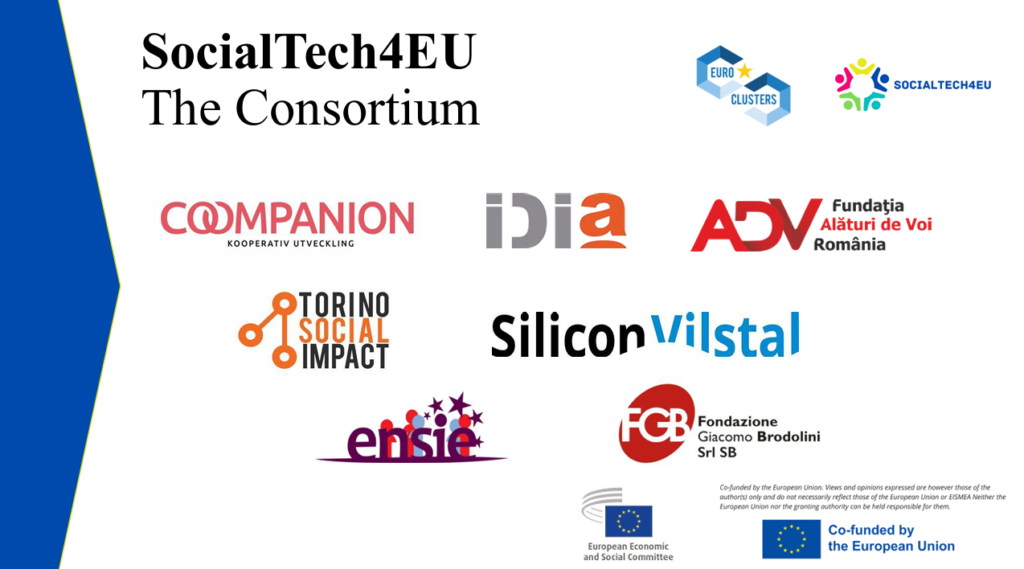
Asociacion Investigacion, Desarrollo E Innovacion En Aragon, ENSIE