Română

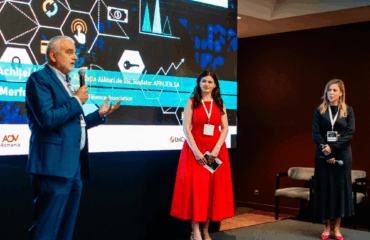
On May 15, 2024, Øyvind Bjørnstad, Head of Sustainability at Vestre, together with Geir Ebbesen, Business Development Manager at Unikum, co-hosted a webinar to discuss Vestre’s approach to sustainability and circularity. They also explored how the collaboration with Unikum, a social enterprise in Oslo, is enhancing social sustainability.
Øyvind provided detailed insights and interesting data on Vestre’s sustainability strategies and tactical measures. His in-depth presentation offered a wealth of inspiration and practical examples for those interested in sustainable business practices.
Vestre’s journey toward becoming the world’s most sustainable furniture company by 2030 serves as an inspiring model for industries aiming to integrate sustainability deeply into their operations.
Key ideas from the webinar with Øyvind Bjørnstad, Head of Sustainability at Vestre
“We believe that being transparent isn’t a risk. It’s actually an advantage.”
Vestre’s Core Values
Vestre’s sustainability strategy is anchored in three core values: good design, durability, and sustainability. The company believes that good design should be accessible to everyone and act as a democratizing tool that fosters social interaction in public spaces. By creating durable products with a lifetime warranty against rust and a 15-year guarantee on paint and rot, Vestre ensures its products withstand the test of time, reducing the need for frequent replacements and contributing to a circular economy.
“Good design should be available to everyone. So it shouldn’t just be constrained to some private person’s room or house. Actually, good design can be a tool, and it can be a democratizing tool, and it can also help create the social meeting places that we as a company are trying to create.”
Commitment to Sustainability and Circular Economy
Vestre’s ambitious goal to become the world’s most sustainable furniture company by 2030 is driven by three primary focus areas: decarbonizing their operations, scaling circular models, and addressing the social impact of their products.
The company’s decarbonization plan includes reducing carbon emissions through technological innovations such as switching to fossil-free steel and biodiesel for transport, as well as enhancing material management to decouple resource use from economic growth.
“We firmly believe that we need to go away from this use and throw mentality. We need to more or less go back to creating high-quality goods that last for a long time and take good care of them.”
Circularity in Practice
A significant aspect of Vestre’s approach to sustainability is their focus on circular economy principles. The company is actively involved in initiatives to repair, refurbish, and recycle their products, extending their lifecycle and reducing waste.
For instance, Vestre has implemented a product passport system that tracks the origins and lifecycle of their materials, providing transparency and facilitating repairs and recycling.
Vestre’s collaboration with Unikum’s maintenance team plays a crucial role in this circular strategy. By maintaining and repairing products in the Greater Oslo area, the team not only extends the lifespan of Vestre’s furniture but also helps reintegrate individuals who have fallen out of the workforce, creating a win-win scenario for sustainability and social impact.
“We really need to involve our suppliers, engage with them, set targets together with them.”
Social Meeting Places and Community Impact
Vestre’s mission to create social meeting places is not just about providing physical spaces but also about fostering social interaction and inclusivity. The company believes that well-designed public spaces can contribute to public health and reduce feelings of loneliness, emphasizing the social benefits of their products.
“Our mission as a company is to create social meeting places where people can get together regardless of background, cultural, economic differences.”
Challenges and Opportunities
Despite the challenges, such as the high initial costs associated with sustainable materials and processes, Vestre remains committed to their sustainability goals. The company has seen increased demand for sustainable products, particularly in markets like the US, which has become their largest market. This shift indicates a growing recognition of the value of sustainable and high-quality products.
“We really believe that quality and sustainability are very tightly linked. Because we need to take into account the time aspect when we are talking about sustainability.”
Find inspiration for your own sustainability initiatives
- Vestre Transparency report (Ethical Trade) →
vestre-as-1703-1715342834.pdf (etiskhandel.no) - Vestre Impact reports →https://vestre.com/no/impact-reports
The webinar was hosted by Øyvind Bjørnstad, Head of Sustainability at Vestre (May 15, 2024).
It was co-organized by Geir Ebbesen, business development manager at Unikum and project manager within the SEEDing – Enterprising for Tomorrow project, implemented by ADV Romania in collaboration with Unikum Aktiv AS (Norway), Ateliere Fara Frontiere (Romania)
Social Finance Association (Romania), RISE Romania. The project was co-financed by from Iceland, Liechtenstein and Norway through the EEA and Norway Grants 2014-2021. The main objective was to increase the competitiveness of at least 100 social enterprises in Romania, with a focus on ICT and green industry.