Română

The Buy Social project is spearheading a transformation in the fashion industry with innovative campaigns in Slovenia and Romania. From promoting second-hand fashion to upcycling coffee bags into high-end designs, these projects are setting new standards for sustainability in the textile sector.
Dive into the stories behind these landmark achievements and discover how social enterprises are transforming waste into eco-friendly garments while simultaneously building a more sustainable and resilient future for Europe. These best practices not only demonstrate the project’s commitment to environmental stewardship but also highlight the pivotal role of social enterprises in realizing the EU’s Circular economy action Plan.
Circular fashion campaign in Slovenia – “Second-hand locally sourced”
The Buy Social project has reached a significant milestone with the successful launch of a second-hand fashion campaign in Slovenia, by KNOF – a pioneer in social entrepreneurship and circular economy in Slovenia with a mission to popularize sustainable lifestyle.
This initiative stands as an example of best practices in promoting circular economy principles within the social enterprise sector.
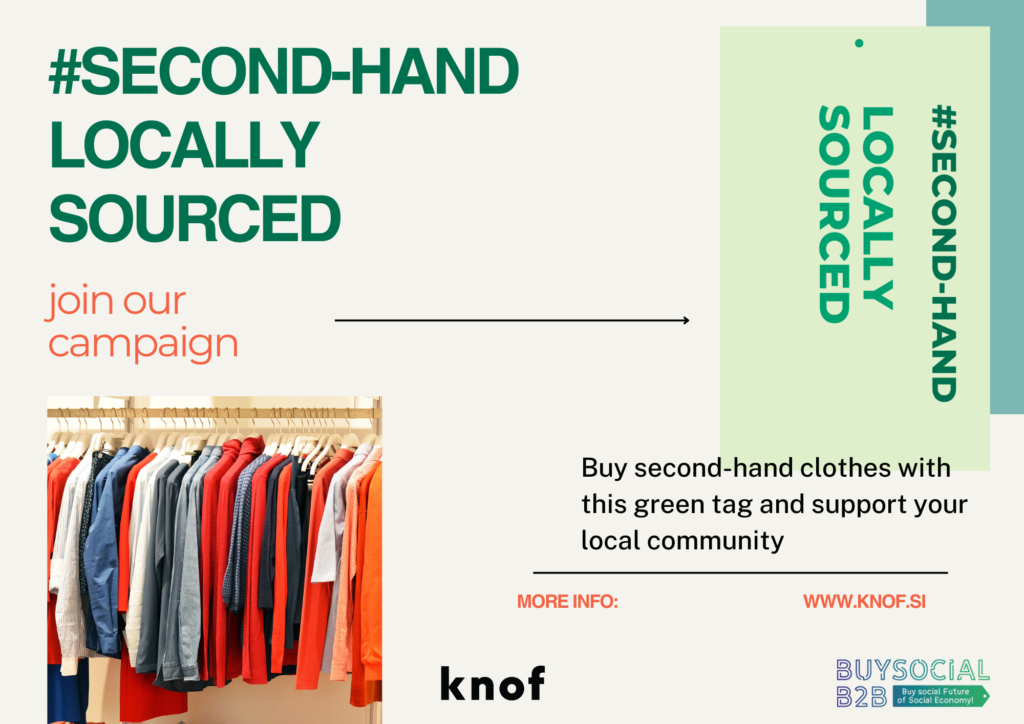
As part of the European Union-funded “Buy Social Future of Social Economy” program, the Slovenian campaign exemplifies the project’s commitment to fostering sustainable business models and improving the competitiveness of social enterprises.
By focusing on second-hand fashion, the campaign aligns perfectly with the growing circular economy trend, addressing critical environmental and social challenges faced by the textile industry.
The Buy Social project, which operates in Slovenia, Romania, Italy, and Poland, aims to strengthen partnerships between social enterprises and mainstream businesses.
Through this Slovenian initiative, the project demonstrates how it’s actively contributing to the circular economy movement, particularly in sectors like textile recycling, fashion, and eco-design.
Key aspects of the campaign that highlight its significance include:
- Circular Economy in Action: The promotion of second-hand fashion directly supports circular economy principles by extending the lifecycle of clothing items. This approach reduces waste, conserves resources, and minimizes the environmental impact associated with new garment production.
- Economic Benefits: By encouraging the purchase of second-hand clothing, the campaign helps consumers save money while supporting local social enterprises. This economic model benefits both buyers and sellers, creating a sustainable marketplace for pre-loved fashion.
- Environmental Impact: The campaign educates consumers about the substantial environmental benefits of choosing second-hand clothing. It emphasizes how this choice reduces water consumption, energy use, and greenhouse gas emissions associated with new garment production.
- Local Sourcing: The “Sourced in Slovenia” branding campaign promotes locally sourced second-hand clothing, further reducing the carbon footprint associated with long-distance transportation and supporting local communities.
- Social Enterprise Empowerment: This initiative showcases how the Buy Social project is actively improving the commercial capacity of social enterprises in the fashion sector, helping them compete effectively in the mainstream market.
- Cross-Border Potential: The success of this Slovenian campaign sets a precedent for similar initiatives across other participating countries, demonstrating the scalability of the Buy Social project’s approach.
- Consumer Awareness: The campaign raises awareness about the importance of conscious consumption, encouraging shoppers to consider the broader impact of their fashion choices.
Romanian innovation in circular fashion: Transforming coffee bean bags into fashion with Opya Fashion
While Slovenia’s second-hand fashion campaign sets a strong precedent, another groundbreaking initiative within the Buy Social project emerges from Romania, showcasing the project’s commitment to innovation and circular economy principles across its partner countries.
ADV Romania, the largest social enterprise in Romania and consortium partner in the Buy Social project, has developed an ingenious circular economy initiative that bridges the gap between waste reduction and high-end fashion. This innovative project focuses on eco-design and upcycling, transforming waste from ADV Romania’s coffee roastery into stylish, sustainable fashion items.
!!! The coffee roastery was established in 2022 as a new business department within UtilDeco, a social enterprise developed by ADV Romania in 2008. UtilDeco’s mission is to create job opportunities for vulnerable groups, including youth from the foster care system, people with disabilities, and individuals from other disadvantaged backgrounds.
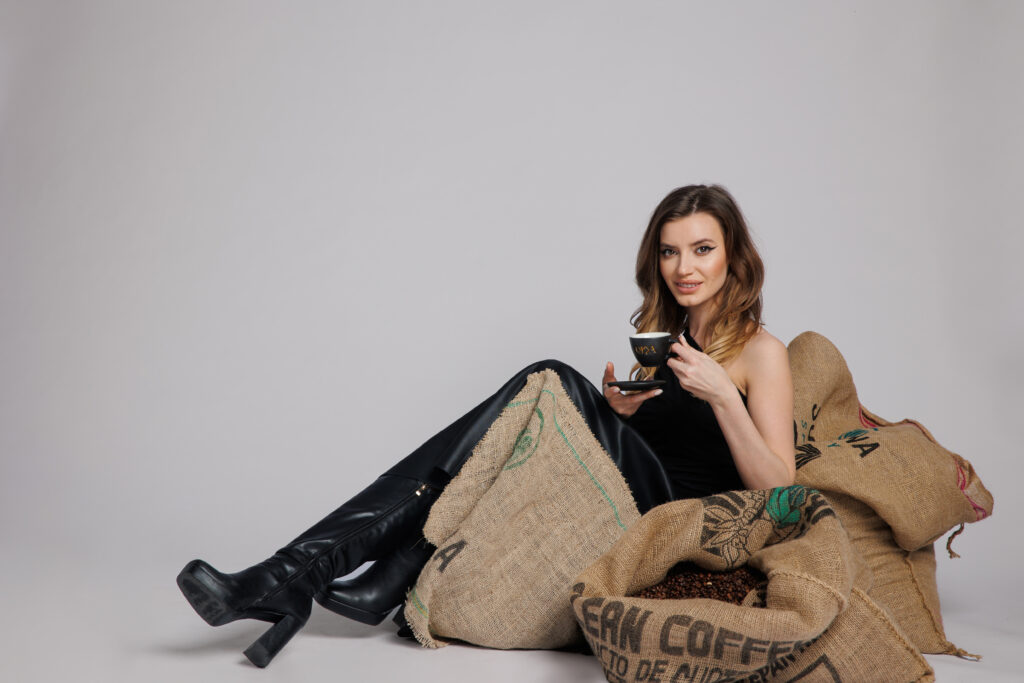
The pinnacle of this initiative is the OPYA Fashion clothing collection, a collaboration with renowned fashion designer Irina Schrotter.
This collection exemplifies creative upcycling at its finest, featuring garments crafted from recycled materials, including specialty coffee bags from OPYA. The involvement of Schrotter, a respected name in the fashion industry, lends prestige to the project and demonstrates how circular fashion can be both sustainable and high-end.


The OPYA Fashion collection made its debut at the “Enterprising for Tomorrow” conference, a significant event in Romania’s social enterprise calendar. The collection was also a highlight of the BuySocial Expo, a dedicated fair for social enterprises from across Romania, organized with financial support from the Buy Social project. This expo provided a platform for showcasing innovative products from social enterprises, with OPYA’s upcycled fashion items taking center stage.
This Romanian initiative stands out as a best practice within the Buy Social project for several reasons:
- Innovation in upcycling: It demonstrates creative ways to repurpose waste materials, specifically coffee bags, into desirable fashion items.
- Collaboration with high-profile designers: The partnership with Irina Schrotter elevates the status of upcycled fashion, proving that sustainability and style can go hand-in-hand.
- Integration of different social enterprise activities: The project connects ADV Romania’s coffee roastery with fashion design, showcasing how social enterprises can create synergies between their various activities.
- Promotion of social enterprises: Through the BuySocial Expo, the project provided visibility not just for OPYA Fashion, but for social enterprises across Romania.
- Circular economy in action: The initiative is a prime example of circular economy principles, turning what would be waste into valuable, marketable products.
By transforming coffee bags into fashion statements, ADV Romania and OPYA Fashion are not just reducing waste – they’re redefining the possibilities of circular fashion.
This initiative serves as an inspiration for other social enterprises within the Buy Social network and beyond, demonstrating how creativity, sustainability, and social impact can be woven together into a successful business model.
The success of both the Slovenian second-hand fashion campaign and the Romanian upcycled fashion project underscores the Buy Social project’s significant impact across its partner countries. These initiatives are setting new standards in the circular economy, proving that social enterprises can lead the way in creating a more sustainable and innovative fashion industry.
By leveraging the growing trend towards circular economy practices, the Buy Social project is not only helping social enterprises thrive but also contributing to a more sustainable and ethical fashion industry.
As the Buy Social project continues to develop and implement similar initiatives across its partner countries, it’s setting new standards for how social enterprises can lead the way in creating a more sustainable and socially responsible economy.
Why reducing waste in textile industry is more relevant that ever?
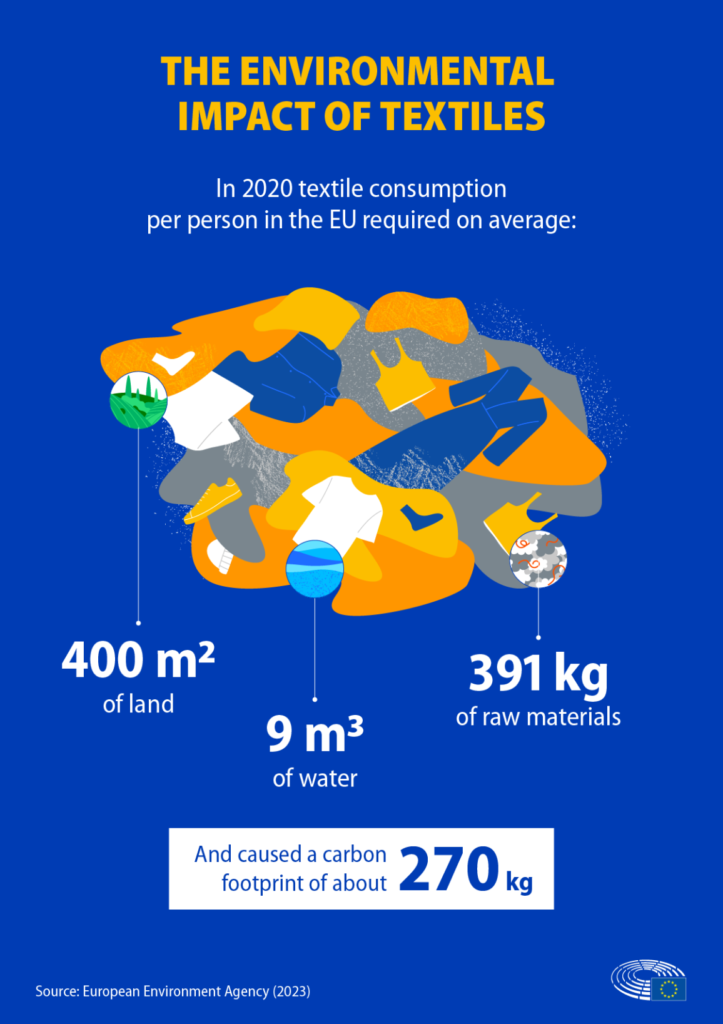
Social enterprises as catalysts in the EU Circular economy action plan
Social enterprises play a pivotal role in realizing the ambitious goals set forth by the European Union’s Circular Economy Action Plan (CEAP). As demonstrated by the innovative initiatives within the Buy Social project, these organizations are uniquely positioned to drive sustainable change and pioneer circular economy practices.
The EU recognizes social enterprises as key actors in the transition to a more sustainable and inclusive economy. Their ability to combine social missions with innovative business models makes them ideal implementers of circular economy principles. Social enterprises often operate at the community level, facilitating local circular economy solutions that can be scaled up and replicated across the EU.
By supporting and promoting projects like the Slovenian second-hand fashion campaign and the Romanian upcycled coffee bag collection, the EU is leveraging the power of social enterprises to:
- Create local jobs in the green economy
- Develop innovative solutions for waste reduction and resource efficiency
- Raise awareness about sustainable consumption and production
- Foster social inclusion through environmentally friendly business practices
As the EU continues to implement its Circular economy action plan, social enterprises will remain at the forefront, turning policy objectives into tangible, community-level actions. Their success stories, like those highlighted in the Buy Social project, serve as blueprints for a more sustainable, circular future across the European Union.
By supporting these enterprises, the EU is not only advancing its environmental goals but also promoting a more inclusive and socially responsible economic model.
Useful resources:
***
Visit the Buy Social webage for all project updates.
Follow BuySocial on LinkedIn.