Română

More than 700 social entrepreneurs who change Romania for the better have been mapped on Ashoka Changemaker Map of 2022.
Ashoka Changemaker Map of 2022 – main insights
- 779 innovators
- 1013 nominations
- Main sectors (65% of innovators): Education, Social Inclusion, Cross-sectorial
- 76% of innovators are from the NGO sector
- 63% of social innovators are female
- 45% of innovators are from the Bucharest-Ilfov region
Who are the social innovators of Romania
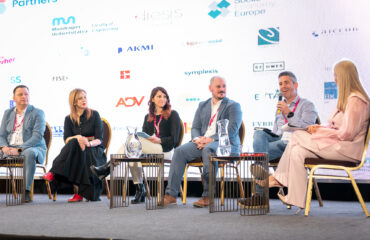
Angela Achiței, president of ADV România, together with partners, collaborators and people from the ADV community are present in the map!
8 Social Entrepreneurs from the Accelerator of Social Enterprises program run by ADV Romania between 2019-2022:
Roxana Damaschin, OilRight, Alexandra Petcu, FlairScent, Lucian Butnaru, Cofeels, Bogdan Dimciu, Ophori Cosmetics, Mircea Ioan Crisbășanu, Conacul Nucu, Ion Georgescu, Asociația Moara de hârtie, Codruț Gârboan, Bricked, Ioana Cerescu, AER.
Members of the Romanian Network of Social Insertion Enterprises through Economic Activity): Ancuța Vameșu (president), Diana Certan, Concordia, Teia Ciulacu, Viitor Plus, Damien Thiery, Ateliere Fără Frontiere Petru Vasile Gafiuc, Institutul Bucovina.
Project partners and collaborators: Raluca Prelucă, fonduri-structurale.ro, Dragoș Jaliu, fonduri-structurale.ro, Aurora Vatamaniuc, Star of Hope, Ana-Cristina Burtea, Inimă de copil, Zoltan Bereczki, Synerb, Florin Ghindă, Romania Pozitivă.
Five years after the first Changemaker Map in 2017, Ashoka launched a new research dedicated to local social entrepreneurship, where more than 700 people were identified by their peers as key, influential people that are contributing to a better society. The research also resulted in a list of social innovators and their supporters, which brings together more than 25 of the most well-known names in social entrepreneurship.
We are launching this map as recognition towards all changemakers for the continued effort to achieve social impact and aim for systemic changes for the good of all. We are humbled by the commitment, creativity and resilience of every single one of the people found in this map. – Ashoka Romania.
Types of organizations, roles, obstacles and opportunities
The type of organizations in which the social innovators in the study
work – 76% are NGOs, followed by public (13%) and private (9%) entities.
An above-average concentration of innovators from NGOs is recorded in the Central region (80%) and Bucharest-Ilfov (78%). The private sector has a share of 14% in the West region and 11% in the Center region. At the same time, public sector innovators are over-represented in the North-East (22%) and North-West (18%) regions and under-represented in the Central region (7.1%).
When it comes to the main obstacles encountered (multiple response), most social innovators mentioned: access to finance (68%), cultural/mindset obstacles (63%), legislative (60%), state involvement (55%), workforce (50%), infrastructure (35%), educational (34%), promotion (31%), organizational (25%), access to professional, know-how (24%) and other logistics-related obstacles (18%).
In terms of the main opportunities mentioned (multiple response), the following were noticed: urgent need for action (68%), untapped potential (67%), strong working community (59%), positive policy changes (37%), affordable financing (33%), market interest (33%). The healthcare sector mentions the market interest opportunity more (48%, compared to an average of 33%). Also, significantly more of those who mentioned the importance of a strong community to work with also mentioned having a regulatory role (72%, compared to the average of 59%).
Regarding the main financing opportunities available (multiple answer), the most mentioned are: financing offered by corporations (60%), EU financing (48%), individual investors (45%), subsidies offered by NGOs (36%), and government subsidies (27%). Most of those who mentioned the financing provided by corporations also mention the role of providing financial support (74% compared to the average of 60%).
Regarding the region of origin, most social innovators come from the Bucharest-Ilfov region (45%), followed by the NorthWest (13%), North-East (12%), West (9%) and the Central region (9%). The distribution was somewhat more balanced in 2017, approx. 25% being from Bucharest-Ilfov, 12% in the Centre, 12% in the North-West and 6% in the North-East.
Explore the Map
Read the full report here.